
For creditors, commercial lenders, and small-to-medium-sized enterprises (SMEs) across England and Wales, navigating the legal enforcement landscape requires constant vigilance. When debtors fail to settle significant liabilities, statutory insolvency tools, such as bankruptcy and winding-up petitions, remain among the most potent instruments for securing attention and recovery. However, sweeping procedural shifts have arrived that fundamentally alter how high-value insolvency matters are handled in the capital.
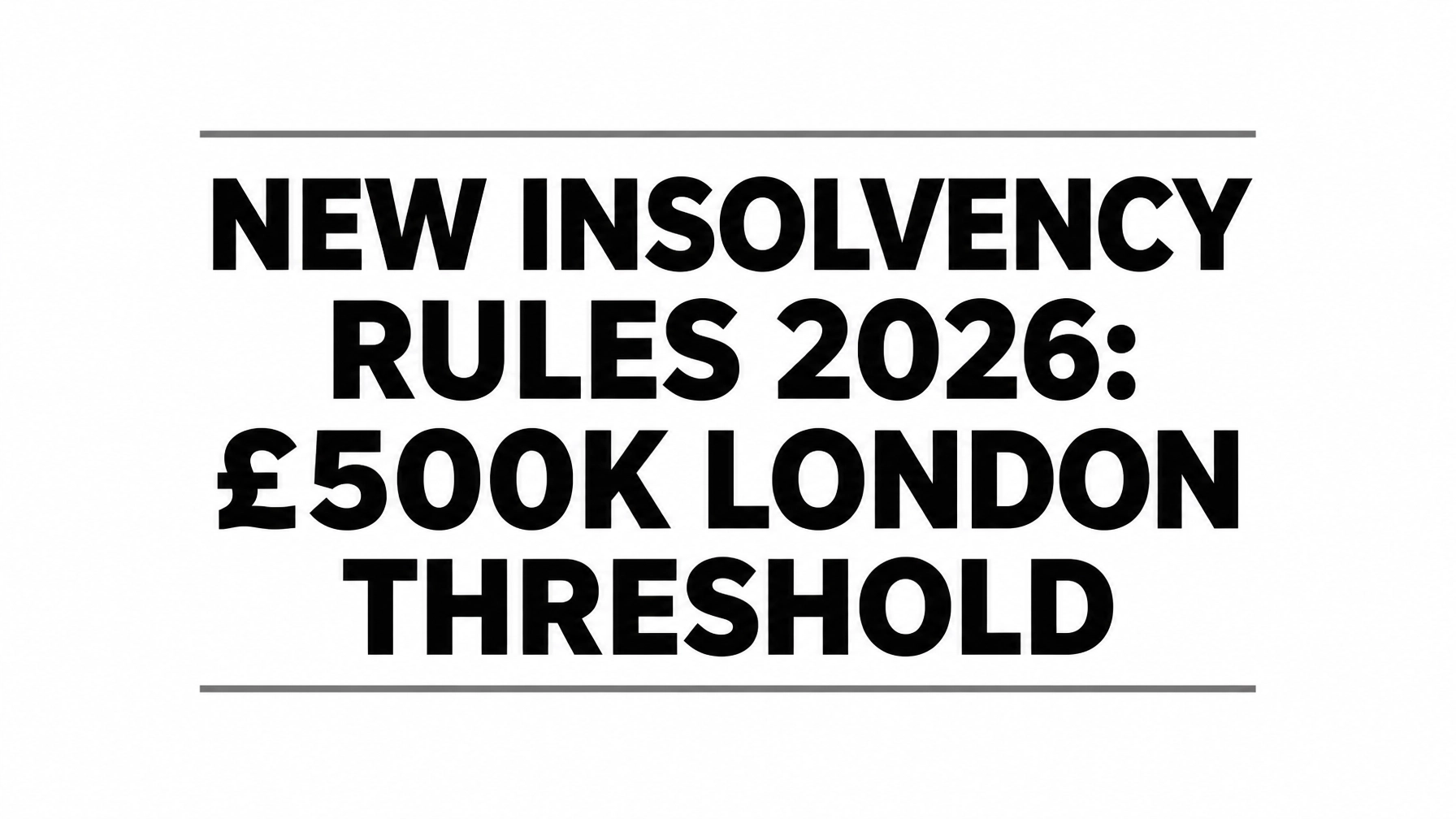
The implementation of the Insolvency (England and Wales) (Amendment) Rules 2026 (SI 2026/561) on 22 June 2026 introduces major structural updates. Most notably, this statutory instrument formalises and expands procedural thresholds within the London Insolvency District, reallocating jurisdiction between the High Court and the County Court. For businesses engaged in robust debt recovery and commercial litigation, understanding these changes is essential to avoid costly procedural missteps, delayed filings, and jurisdictional rejections.
In this comprehensive guide, our civil litigation and debt recovery specialists at Tyndel Solicitors break down the core amendments effective 22 June 2026, the mechanics of the new £500,000 London threshold, the long-overdue removal of outdated delivery methods, and strategic considerations for creditors pursuing delinquent debtors.
The 22 June 2026 Regulatory Shift: An Overview
The 2026 amendment rules did not arrive in a vacuum. Throughout the preceding year, the judiciary and the Ministry of Justice tested administrative reallocations to ease docket congestion in the High Court’s Insolvency and Companies Court (ICC). The 22 June 2026 statutory instrument codifies these operational adjustments into binding law across England and Wales.
While general statutory insolvency principles, such as the minimum debt required to issue a statutory demand or petition under the Insolvency Act 1986, remain rooted in established statutory frameworks, the court allocation rules for petitions presented in London have been radically redrawn.
For a broader perspective on how these enforcement mechanisms fit into modern credit control strategies, read our recent analysis on Business Debt Recovery in 2026: A Practical Guide for SMEs Chasing Unpaid Invoices. Furthermore, ongoing legislative scrutiny around B2B prompt payment practices, often discussed under the umbrella of commercial payments legislation and the Commercial Payments Bill framework, underscores why creditors must stay fully aligned with statutory updates.
The £500,000 London Bankruptcy Petition Threshold

The headline change within SI 2026/561 is the dramatic upward revision of the financial threshold governing where bankruptcy petitions are presented within the London Insolvency District.
Prior to 22 June 2026, the dividing line between High Court allocation and County Court allocation in London was set at £50,000. Under amended rule 10.11(1)(a) and (b) of the Insolvency Rules 2016, that financial limit has been increased tenfold, from £50,000 to £500,000.
What This Means in Practice
- High Court (Insolvency and Companies Court):
Any bankruptcy petition presented in the London Insolvency District where the petition debt (or aggregate petition debt) exceeds £500,000 must be filed in the High Court. - County Court at Central London:
Any bankruptcy petition presented in the London Insolvency District where the petition debt is £500,000 or less must now be presented to the County Court at Central London.
Critical Distinction: Court Allocation vs. Minimum Bankruptcy Level
It is vital for creditors and credit control teams not to confuse court allocation thresholds with the baseline statutory debt threshold. The absolute minimum debt required under the Insolvency Act 1986 to present a bankruptcy petition against an individual (the "bankruptcy level," currently £5,000) remains unchanged.
The £500,000 figure is strictly a jurisdictional and administrative allocation threshold for the London district. It determines whether your petition is processed through the County Court or the High Court. Filing a £75,000 bankruptcy petition in the High Court in London post-22 June 2026 will result in administrative rejection or costly transfer orders, wasting valuable time and legal expense.
Transitional Rules
The £500,000 threshold applies strictly to petitions presented on or after 22 June 2026. For any bankruptcy petition formally presented prior to that date, the former £50,000 threshold governs ongoing court administration.
Modernising Procedure: Removal of Fax as a Delivery Method

Beyond financial thresholds, the Insolvency Rules 2026 introduce important procedural housecleaning designed to reflect modern legal operations.
For decades, facsimile (fax) transmission was accepted as a valid method for serving certain notices, statutory demands, and court documents in insolvency proceedings. However, in an era of secure email, encrypted portal exchanges, and cloud-based document management, fax has become obsolete and prone to verification failures.
Effective 22 June 2026, fax has been officially removed as an approved delivery and service method across the insolvency rules.
Why This Matters for Creditors
- Service Compliance: Legal representatives and in-house credit teams must ensure that all formal service protocols rely exclusively on permitted methods, such as personal service, first-class post, certified document delivery, or approved electronic service where rules and CPR guidelines permit.
- Avoiding Invalid Service: Attempting to serve insolvency notices via legacy fax numbers will no longer satisfy statutory requirements. An invalidly served demand or petition renders subsequent proceedings legally defective, exposing creditors to strike-out applications and adverse costs orders.
Strategic Guidance for Creditors and SMEs

Navigating these regulatory shifts requires a disciplined, commercially astute approach to debt recovery and civil litigation. When dealing with recalcitrant debtors holding substantial liabilities, SMEs and commercial lenders should consider the following strategic steps:
1. Pre-Action Due Diligence and Jurisdiction Checks
Before initiating formal insolvency proceedings, verify the debtor’s residential or registered address to confirm whether the matter falls within the London Insolvency District or outside the capital (where regional County Court hearing centres apply). If filing in London, verify whether the debt clears the £500,000 hurdle.
2. Leverage Comprehensive Legal Frameworks
Insolvency petitions should never be used lightly; they form part of a wider escalation ladder that includes pre-action letters of claim, County Court claims, summary judgments, and rigorous enforcement methods (such as writs of control or charging orders). Working alongside experienced legal counsel ensures your commercial leverage is maximized at every stage.
3. Review Internal Credit Control Procedures
Ensure your credit management teams and external collection partners have updated their Standard Operating Procedures (SOPs) to reflect the removal of fax transmission and the new £500k London court routing rules.
How Tyndel Solicitors Can Help
At Tyndel Solicitors, our dedicated civil litigation and debt recovery teams possess extensive experience representing private individuals, commercial lenders, and SMEs across England and Wales. We provide robust, pragmatic legal representation, from initial statutory demands and High Court or County Court petition filings to complex contested insolvency proceedings.
Whether you are managing overdue commercial invoices, evaluating enforcement options under the latest 2026 insolvency rules, or requiring strategic counsel in commercial disputes, our experts are here to protect your commercial interests.
To discuss your debt recovery or civil litigation requirements with our professional legal team, please visit our practice area pages:
Request a Free Consultation
OFFICE
Office 4571
58 Peregrine Road
Ilford
IG6 3SZ
OPENING TIME
Monday - Friday: 10:00 - 18:00
Saturdays - Sundays & Bank Holidays: Closed
TELEPHONE
Landline: 02081543131
Mobile / WhatsApp: 07918811842
EMAIL
[email protected]